
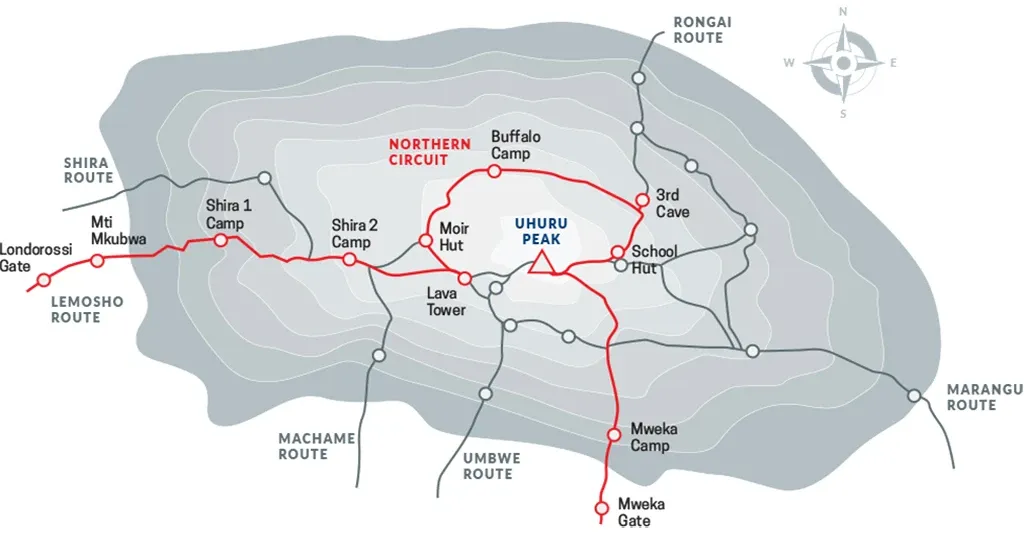
Choosing the right route is one of the most important decisions when planning a Mount Kilimanjaro climb. Each Kilimanjaro route offers a different experience, with variations in scenery, terrain, difficulty, duration, traffic, accommodation, and acclimatization.
This guide compares the Machame, Lemosho, Shira, Northern Circuit, Rongai, Marangu, and Umbwe routes to help climbers understand the differences and choose an itinerary that suits their experience, fitness, available time, and preferences.
There is no single route that is best for every climber. The right choice depends on the following factors:-
1. Available time
Longer itineraries generally allow more time on the mountain and for acclimatization.
→ Why Acclimatization Matters
Altitude is one of the most important considerations when choosing a Kilimanjaro itinerary. Longer itineraries generally allow more time for the body to adapt to increasing elevation.
However, route duration is only one factor. Pacing, altitude gain, rest, hydration, and proper monitoring by the mountain crew also contribute to a safer and more comfortable climb.
2. Trekking experience
Some routes have steeper and more demanding terrain than others.
3. Scenery
Different approaches offer different landscapes and perspectives of Kilimanjaro.
4. Accommodation preference
Marangu uses mountain huts, while the other main routes use camping.
5. Trail atmosphere
Some routes are considerably busier, while others offer a quieter experience.
Use the comparison below to understand the main differences between Kilimanjaro’s routes.
| Route | Approach | Duration | Difficulty | Scenery | Traffic | Acclimatization |
|---|---|---|---|---|---|---|
| Machame | Southwest | 6–7 days | Moderate–High | ⭐⭐⭐⭐⭐ | High | Good |
| Lemosho | West | 7–8 days | Moderate | ⭐⭐⭐⭐⭐ | Moderate | Excellent |
| Northern Circuit | West/North | 8–9 days | Moderate | ⭐⭐⭐⭐⭐ | Low | Excellent |
| Rongai | North | 6–7 days | Moderate | ⭐⭐⭐⭐ | Low–Moderate | Good |
| Marangu | Southeast | 5–6 days | Moderate | ⭐⭐⭐ | High | Fair |
|
Umbwe |
South | 5–6 days | High | ⭐⭐⭐⭐ | Low | Limited |
Important: These are general comparisons. Actual difficulty and acclimatization experience vary between climbers.
Known as the “Whiskey Route,” It’s the most popular route with dramatic scenery and the famous Barranco Wall.
The Marangu Route is the only Kilimanjaro route that offers hut accommodation instead of camping.
The Northern Circuit is the longest Kilimanjaro route and offers highest summit success rates.
Approaching Kilimanjaro from the northern side near the Kenyan border, It’s known for its quieter trails and unique wilderness scenery
Approaching Kilimanjaro from the western side and crosses the spectacular Shira Plateau before joining the Machame trail toward the summit.
The Umbwe Route is the steepest and most direct path on Kilimanjaro, offering a challenging climb for experienced trekkers.
Each Kilimanjaro route approaches the mountain from a different direction. This affects the landscapes encountered, the trail profile, the level of traffic, and how the route connects with other trails.
The route begins on the southwestern side of Mount Kilimanjaro and ascends through the lush southern rainforest.
At higher elevations, the trail traverses the southern slopes beneath the spectacular Southern Icefields before continuing toward the summit from the south.
The route begins on the southeastern side of the mountain and follows a relatively direct ascent toward the summit.
The ascent and descent use the same trail, so the scenery along the route is largely the same in both directions.
Both routes approach Kilimanjaro from the west, crossing the expansive volcanic landscape of the Shira Plateau.
After crossing the plateau, the routes converge with the southern approach routes and continue toward the summit through the southern slopes.
The route begins on the western side of Kilimanjaro and follows the northern slopes rather than turning immediately toward the southern routes.
It forms a wide circuit around the remote northern side of the mountain, providing views of Kilimanjaro from multiple angles before continuing toward the summit.
The route begins on the northern side of Kilimanjaro, close to the Kenyan border, and approaches the mountain from its drier northern slopes.
This side receives less rainfall because of the mountain’s rain-shadow effect, resulting in a noticeably drier and more open landscape.
The route eventually crosses into the eastern side of the mountain and connects with the Marangu route near Kibo before the final summit ascent.
The route begins on the southern side of Kilimanjaro and follows a steep ridge toward the higher slopes of the mountain.
It is one of the steeper and more direct approaches, with less gradual terrain in its initial stages and a relatively demanding ascent before joining the southern circuit.
Known as the “Whiskey Route,” Machame is one of Kilimanjaro’s most popular routes. It offers impressive scenery and varied landscapes, including rainforest, moorland, alpine desert, and the dramatic southern slopes of Kibo.
Highlights
Typical duration: 6–7 days
Difficulty: Moderate to challenging
Accommodation: Camping
Best suited to: Climbers looking for a scenic route and comfortable with trekking over varied terrain.
View 7 days Machame Route Itinerary →
Lemosho approaches Kilimanjaro from the west and is widely regarded as one of the mountain’s most scenic routes. The trail passes through beautiful forest before reaching the expansive Shira Plateau and eventually joining the southern circuit.
Highlights
Typical duration: 7–8 days
Difficulty: Moderate
Accommodation: Camping
Best suited to: Climbers who have enough time and want a balance of scenery, acclimatization and adventure.
View the 7days Lemosho Route Itinerary →
The Shira Route approaches Mount Kilimanjaro from the west, crossing the Shira Plateau before connecting with the southern circuit. Compared with Lemosho, the route begins at a higher elevation, meaning the initial trekking stages involve less gradual altitude gain.
Key features
Best suited to: Experienced trekkers who are comfortable with an initially higher starting elevation and are looking for a less commonly used western approach.
The Northern Circuit is Kilimanjaro’s longest established route and takes a wide path around the northern slopes of the mountain.
Its longer itinerary allows more time for gradual acclimatization, while the northern side generally experiences fewer trekkers than the more popular southern routes.
Highlights
Typical duration: 8–9 days
Difficulty: Moderate
Accommodation: Camping
Best suited to: Climbers with enough time who prioritize acclimatization, scenery and a quieter trail experience.
View the 9 Days Northern Circuit Route Itinerary →
Rongai is the only major Kilimanjaro route approaching from the northern side. The northern slopes receive less rainfall, creating a drier landscape compared with the southern approaches.
The route offers a quieter trekking experience before connecting with the eastern side of the mountain for the summit ascent.
Highlights
Typical duration: 6–7 days
Difficulty: Moderate
Accommodation: Camping
Best suited to: Climbers who prefer a quieter route and the distinctive landscape of northern Kilimanjaro.
View the 7 days Rongai Route Itinerary →
Marangu is famously known as the “Coca-Cola Route.” It is the only major Kilimanjaro route that uses mountain huts rather than tents for overnight accommodation.
The trail follows the same path for both ascent and descent and has a relatively straightforward profile.
Highlights
Typical duration: 5–6 days
Difficulty: Moderate
Accommodation: Mountain huts
Best suited to: Climbers who prefer hut accommodation and a more straightforward trekking route.
View the 6 days Marangu Route Itinerary →
Umbwe is one of the steepest and most direct approaches to Kilimanjaro. The initial section follows a demanding ridge before joining the southern circuit at higher elevations.
Because of its steep profile and limited time for acclimatization on shorter itineraries, it is generally more suitable for experienced mountain trekkers.
Highlights
Typical duration: 5–6 days
Difficulty: Challenging
Accommodation: Camping
Best suited to: Experienced trekkers who are comfortable with steep terrain and demanding ascents.
Scenery, a gradual approach and more time for acclimatization are priorities.
A scenic and adventurous route with varied terrain is preferred.
There is enough time for a longer itinerary and a quieter experience is preferred.
A drier landscape and northern approach are appealing.
Mountain hut accommodation is preferred.
A steep and challenging approach suits the trekking experience.
Lemosho, Northern Circuit & Machame Route
Northern Circuit & longer Lemosho itineraries
Northern Circuit & Rongai Route
Marangu Route
Umbwe Route
Marangu & shorter Machame itineraries
Need Help Choosing Your Route?
Every climber has different goals, experience, fitness levels, and available time. The WalkWild Adventures team can help recommend a route that matches your needs and gives you the best possible Kilimanjaro experience.